
There are relationships we know how to celebrate.
Weddings come with vows.
Graduations have gowns.
Birthdays have candles.
Retirements have speeches.
Death has funerals.
A new baby arrives and suddenly there are announcements, cards, flowers, photographs and people discussing the exact weight of someone they met approximately six minutes ago.
We are very good at recognising certain transitions.
But some of the most important relationships in a life receive almost no ceremony at all.
There is no official day for the sister who has known every version of you.
No formal ritual for thirty years of friendship.
No certificate for the aunt who quietly became a second mother.
No anniversary marking the person who picked up the phone every single time one particular year went badly.
No procession for somebody who has spent decades making your life more possible.
They simply continue.
And perhaps because they continue, we forget to stop and acknowledge them.
Sisters are particularly strange witnesses
A sister may remember a version of you that almost nobody else has access to.
Before the job.
Before the marriage.
Before the children.
Before you became good at introducing yourself.
Before you understood which parts of your personality needed explanation.
Perhaps even before you had a personality anyone would voluntarily spend time with.
She knew the household that made you.
The rules.
The tensions.
The jokes.
The phrase everybody used.
The cupboard nobody was allowed into.
The relative everybody behaved differently around.
The year money was tight.
The holiday everyone still argues about.
The version of your parents that existed before either of you fully understood they were people.
That is a peculiar kind of intimacy.
Not necessarily closeness.
Sisters are not automatically best friends simply because they share a family.
Some are inseparable.
Some love each other beautifully from a distance.
Some are complicated.
Some become close only after childhood.
Some never do.
But where a relationship endures, there is often something almost archaeological about it.
A sister has access to the excavation site.
She knows where some of the earlier versions are buried.
Perhaps that is why siblings can irritate us with such efficiency
There is nothing quite like becoming an accomplished adult only to spend twenty minutes with a sibling and discover that you are apparently twelve again.
You can run a company.
Manage a household.
Raise children.
Give intelligent advice.
Pay taxes.
Then somebody uses the wrong tone at a family lunch and suddenly your entire nervous system is operating from 1997.
It is astonishing.
Perhaps this happens because siblings do not meet the polished version first.
Most adult relationships begin after some editing has already happened.
We have developed manners.
Preferences.
Boundaries.
A way of explaining who we are.
Siblings may have known us before the edit.
They saw drafts.
Bad drafts.
Experimental drafts.
The era we would prefer not to discuss.
The hairstyle.
The obsession.
The inexplicable phase in which we apparently thought that outfit looked excellent.
And there is something both infuriating and comforting about being known across that much time.
You cannot entirely reinvent yourself in front of somebody who remembers the original evidence.
This portrait makes me think about recognition
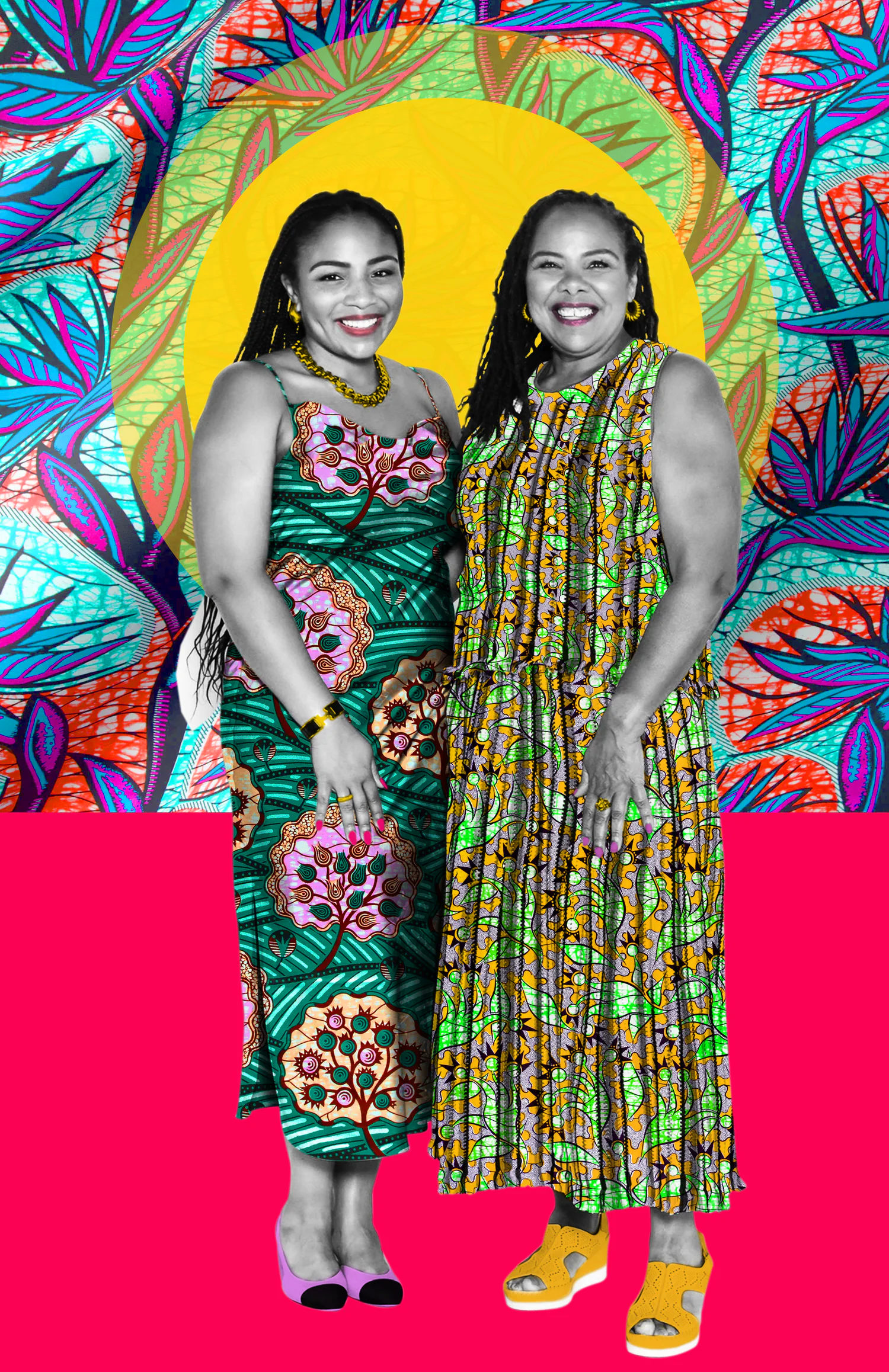
These two women are sisters.
That fact changes the way I look at the picture.
Not because I know their private history.
I don’t.
And I don’t need to.
What interests me is the decision to make an image of the relationship itself.
That is different from simply having photographs in which two siblings happen to appear.
A portrait commission says:
Stand together.
Stay there.
Let this relationship become the subject.
That is surprisingly powerful.
We make countless photographs of occasions.
Christmas.
Birthdays.
Weddings.
Trips.
Dinner.
But sometimes the occasion is not the point.
The people are.
Perhaps this is one of the things portraiture can do particularly well.
It can create ceremony where life did not provide one.
Maybe that is what a ceremony really is
We tend to think ceremony requires tradition.
Special clothes.
A venue.
A speech.
Something formal.
But perhaps, underneath all of that, ceremony is simply concentrated attention.
For a certain amount of time, everyone agrees:
This matters.
Stop what you are doing.
Look here.
Remember this.
That is what a wedding does.
That is what a funeral does.
That is what graduation does.
The ritual creates a frame around something we might otherwise move through too quickly.
And perhaps we could use more frames.
Not for everything.
Nobody needs a ceremonial gong every time somebody makes a cup of tea.
But there are people we move beside for years without ever formally acknowledging the scale of their presence.
Perhaps a portrait can become a small ceremony.
No aisle.
No vows.
No seating plan.
Just:
Come here.
Stand next to me.
Let’s make something of this.
We underestimate relationships that do not change our legal status
Romantic love has paperwork.
So does marriage.
So does divorce.
Parenthood generates an impressive amount of administration.
But sisterhood?
Friendship?
Mentorship?
Chosen family?
These relationships can profoundly alter the course of a life without leaving much official evidence.
A friend can change the city you live in.
A sister can alter whether you survive a difficult year with your sense of humour intact.
An aunt can become the person whose house teaches you what safety feels like.
A neighbour can help raise a child.
A teacher can rearrange somebody’s understanding of what they are capable of.
None of this necessarily creates a document.
Which means some of the most important architecture in our lives is almost entirely informal.
I find that beautiful.
And slightly alarming.
Because informal things are easy to take for granted.
There are people who become structural
You do not think about the foundations of a house every time you walk into the kitchen.
You simply trust the floor.
Some relationships are like that.
They become part of the structure.
The person you call without asking whether it is a good time.
The person who understands the shortened version of the story.
The person to whom you can send a photograph with no explanation and receive exactly the correct response.
The person who knows what “she’s doing that thing again” means.
The person who remembers the original version of a family story before it was improved through twenty years of retelling.
Their presence becomes ordinary.
And ordinary can disguise importance very effectively.
We notice structural things most clearly when they disappear.
Perhaps one purpose of art is to notice before disappearance forces us to.
This is where colour becomes interesting to me
When I worked on this portrait, I did not want the sisters to disappear politely into the frame.
The patterns are unapologetic.
The colours insist.
The clothing becomes larger than clothing.
Visually, the two women acquire ceremony.
That matters to me because so many intimate relationships are experienced privately while public significance is reserved for other things.
History gives monuments to generals.
Institutions give portraits to founders.
Families often leave their most important people inside camera rolls.
I am interested in reversing that scale through my artistic process.
What if the sister deserves the wall?
What if friendship deserves the large frame?
What if the person who has shown up quietly for twenty years deserves visual grandeur?
Not because they are famous.
Because fame and importance are not the same thing.
Personal importance is its own kind of scale
This may be one of the ideas at the centre of Frequency of Love.
A person can be almost entirely unknown to the world and enormous within one life.
That discrepancy fascinates me.
Public history has to make choices.
There are too many lives.
Too many stories.
So it remembers selectively.
But homes operate by different rules.
A wall does not need to justify itself to history.
It can say:
This woman mattered here.
This relationship shaped this house.
These people belong to our story.
There is tremendous freedom in that.
We do not need public consensus before treating someone as significant, or before recognising that today’s ordinary portrait may become part of tomorrow’s family history — a thought at the heart of You Are Somebody’s Ancestor in Progress.
Sisters often inherit the same past differently
That may be one of the most interesting things about them.
Two people can grow up in the same house and leave with different childhoods.
One remembers the holidays.
One remembers the arguments.
One thought somebody was strict.
The other thought they were funny.
One remembers scarcity.
The other remembers adventure.
Memory is not CCTV.
It is selective, emotional, constantly edited.
So perhaps sisters do not merely preserve the past for one another.
They complicate it.
“That’s not how I remember it.”
What an important sentence.
It reminds us that family history is rarely singular.
There are overlapping versions.
Competing interpretations.
Missing pieces.
Different angles.
Perhaps that is healthy.
A family story that belongs completely to one narrator can become mythology very quickly.
A sister may be the person who says:
No.
There was another side.
Being witnessed over time is a form of intimacy
We usually think intimacy means disclosure.
Telling somebody the secret.
Sharing the fear.
Being emotionally open.
But perhaps duration creates another kind.
The intimacy of accumulated evidence.
Someone has seen you bored.
Tired.
Jealous.
Brilliant.
Wrong.
Kind.
Petty.
Generous.
Heartbroken.
Overconfident.
Underprepared.
They have seen you change your mind about things you once announced with extraordinary certainty.
And still, perhaps, the relationship remains.
That is not always glamorous.
But it is very human.
A long relationship contains multiple versions of both people.
Which means loving someone across time requires continual revision.
You cannot love only the person they were.
You have to meet who they keep becoming, just as children keep and reinterpret the versions of us they once knew.
That seems especially true of siblings.
Childhood gives you the relationship.
Adulthood asks whether you are willing to rediscover the person inside it.
Perhaps that is one reason adult sisterhood can become so interesting
As children, siblings are often grouped by circumstance.
Same house.
Same adults.
Same timetable.
Same dinner.
The relationship is unavoidable.
Then adulthood removes the infrastructure.
Different homes.
Different responsibilities.
Different cities.
Different lives.
And whatever remains becomes more voluntary.
That changes the meaning.
The sister you had to share a room with can become the person you choose to ring.
The child who drove you mad can become the adult whose judgement you trust.
Or perhaps the relationship becomes something else entirely.
There is no single correct version.
But I find the possibility moving.
Some relationships are inherited first and chosen later.
We should probably celebrate people before an ending gives us permission
This is the thought I keep returning to.
We become wonderfully articulate about people when they leave.
Retirement speeches.
Eulogies.
Farewell cards.
Suddenly everyone has paragraphs.
You changed my life.
You always made me laugh.
You were there when.
I will never forget.
These things are beautiful.
But occasionally I wonder why affection becomes easier to formalise once it is too late to become embarrassing.
Why not now?
Why not while somebody can roll their eyes?
Why not make the speech while they are sitting at the table?
Why not commission the picture when the relationship is still alive enough to argue about whether you chose a flattering photograph?
There is something joyful about recognition in the present tense.
Not:
You mattered.
You matter.
Maybe art can be a kind of punctuation
Life runs on.
Work.
Shopping.
Messages.
Appointments.
Children.
Bills.
Things needing chargers.
Something leaking unexpectedly.
The years pass partly because Tuesday keeps happening.
Art can interrupt that.
A portrait places a full stop somewhere.
Not an ending.
A pause.
Look.
Here.
This.
These two people.
This relationship.
This version of them.
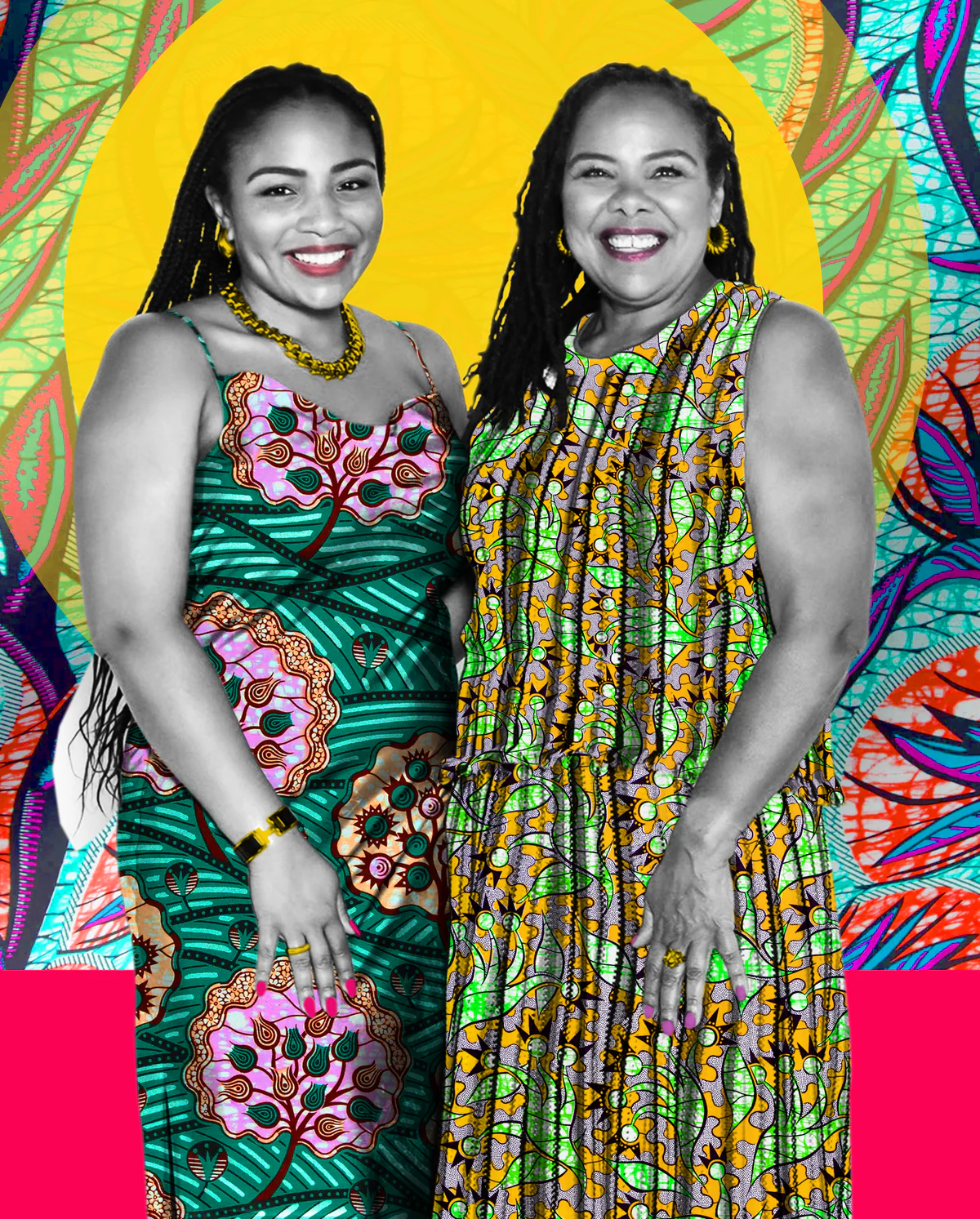
That is what I see in this sisters portrait.
Not an attempt to summarise an entire bond.
That would be impossible.
A pause inside it.
A small ceremony of attention.
There are relationships nobody will write into the history books
Good.
They do not need to.
History books have a different job.
Homes can remember more intimately.
They can remember the person who danced badly.
The aunt with extraordinary jewellery.
The sister who always arrived late.
The cousin who made Christmas bearable.
The friend who knew exactly when not to offer advice.
The person who never became famous but became essential.
Perhaps that is one reason portraits belong in homes.
They allow significance to operate at human scale.
Not:
Who changed the world?
But:
Who changed yours?
That may be a much more interesting question.
We do not need to wait for someone else to invent the ceremony
There may never be an official ritual for sisterhood.
No registrar.
No certificate.
No recognised anniversary.
No culturally agreed moment when everyone gathers and says:
These two people have known each other for decades and somehow still answer the phone.
Perhaps that’s fine.
We can make our own forms of recognition.
Dinner.
A letter.
A photograph.
A portrait.
A ridiculous trip.
A frame on the wall.
Something that interrupts familiarity long enough to restore importance.
Because familiarity is wonderful, but it can make extraordinary things look ordinary.
Sometimes we need to look again.
At the person who has been there so long we have forgotten what their presence has cost, given, witnessed or made possible.
At the relationship that never received a title grand enough for its actual weight.
At the person who knows which version of the story is true.
And perhaps simply say:
This mattered.
This matters.
Come here.
Let’s make something of it.
Make a ceremony of the people who matter
A Frequency of Love commission transforms a photograph of a real relationship into something deliberately visible — rich with colour, pattern and presence, and made to honour the people whose importance does not need public recognition to be real.