
We tend to imagine ancestors in sepia.
They arrive already historical.
Serious faces.
Unfamiliar clothes.
Names written carefully beneath photographs.
People who seem to have spent their entire lives being remembered.
But of course they didn’t.
They were just alive.
They overslept.
Lost things.
Changed their minds.
Fell out with people.
Bought something they regretted.
Had favourite songs.
Had days when nothing particularly meaningful happened.
They stood in kitchens.
Missed buses.
Worried about money.
Laughed at jokes that would make absolutely no sense to us now.
And at some point somebody took a photograph.
Not necessarily an important photograph.
Just a photograph.
That is the strange thing.
History almost never knows it is history while it is happening.
Somewhere in your phone is somebody’s family archive
That thought unsettles me slightly.
Because we are producing more photographs than any generation before us, yet perhaps treating each individual image as less precious.
We take ten.
Twenty.
Fifty.
Someone blinks.
Delete.
The light is wrong.
Delete.
My face looks strange.
Delete.
The children won’t stand still.
Take another.
The photograph exists for six seconds before judgement arrives.
But imagine removing the present from it.
Imagine fifty years passing.
Suddenly the things we disliked may become the very things somebody treasures.
The hairstyle.
The sofa.
The wallpaper.
The ridiculous trainers.
The kitchen before it was renovated.
The face before it changed.
The child before he grew.
The person before everybody started calling her Grandma.
Time is a remarkable editor.
It removes our obsession with whether we looked perfect and leaves us grateful that somebody pressed the button at all.
Every old photograph began as a new one
This seems obvious.
And yet I don’t think we really behave as though we understand it.
We treat historical photographs with reverence.
White gloves.
Archives.
Careful captions.
High-resolution scans.
Who is this?
Where were they?
What year?
Can anybody identify the building?
We peer into them searching for clues.
Then we return to our own photographs and leave seventeen thousand of them in a camera roll called Recents.
Perhaps we believe history starts later.
After enough years.
After somebody dies.
After a photograph becomes faded enough to acquire importance.
But history doesn’t start later.
It is simply the present after time has happened to it.
That means today is already becoming something.
So are we.
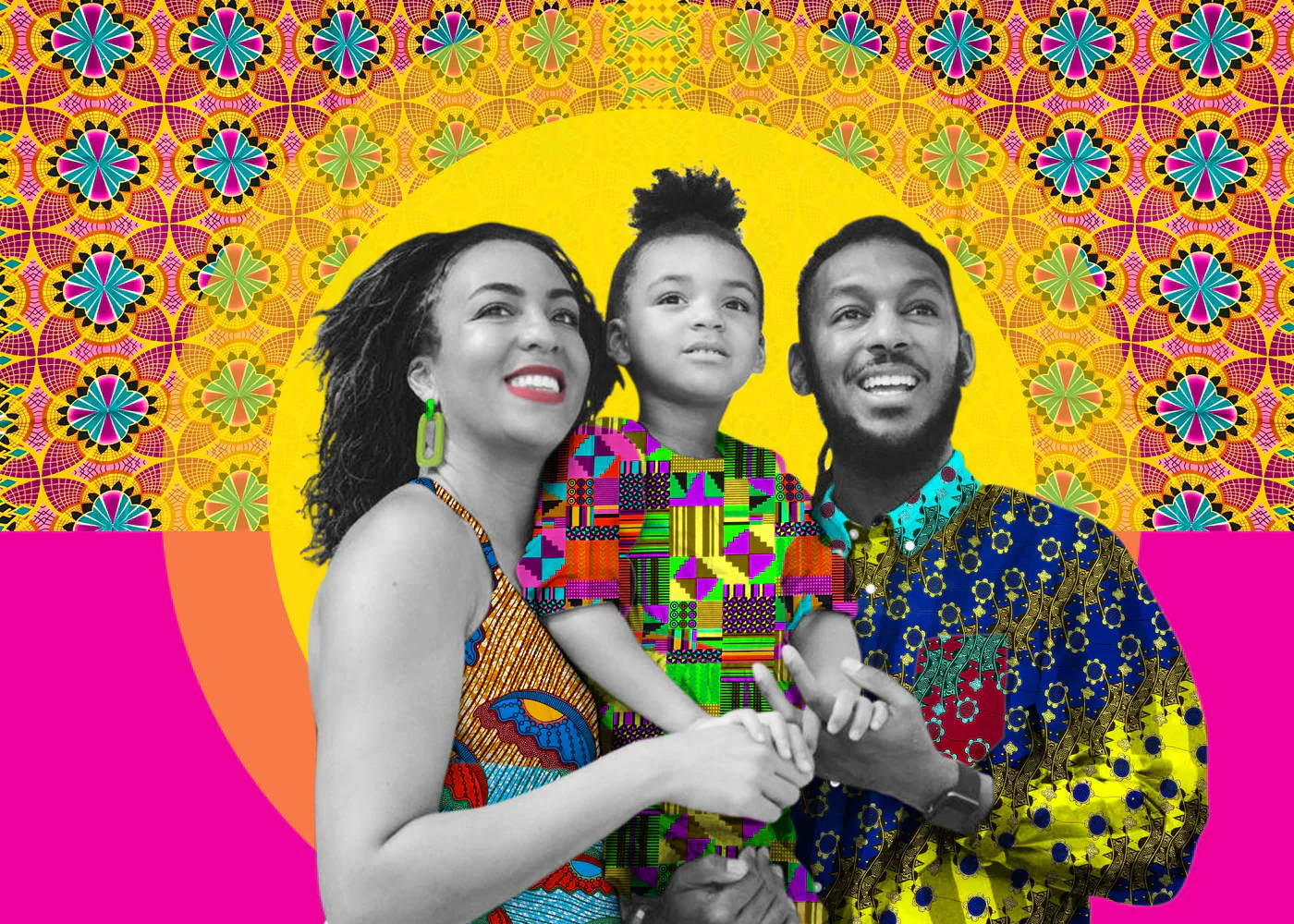
This is one of the things I feel when I work on a contemporary family portrait
A commission begins with people who are here now.
That changes everything.
I am not looking backwards into an archive.
I am working with a family who can see the finished piece, live beside it, walk past it, disagree about where it should hang and perhaps eventually stop consciously noticing it at all.
It becomes part of the house.
That interests me.
Because one day, if it is kept, the meaning may change.
What begins as contemporary artwork can become family history.
The people inside it may acquire new names.
Mum.
Dad.
Grandad.
Auntie.
The child becomes the person telling the story.
The parent becomes the younger version nobody can quite believe was ever that age.
That changing view of a parent is also at the heart of The Versions of Us Our Children Keep.
The portrait remains still while everybody inside it keeps moving.
That is a peculiar privilege for an artwork.
We imagine legacy far too grandly
Legacy is one of those words that arrives wearing an expensive coat.
It sounds like foundations.
Buildings.
Great achievements.
Names attached to institutions.
Something we are supposed to construct deliberately and leave behind in excellent condition.
But most human legacy is much less organised.
A phrase somebody always used.
A recipe nobody follows exactly.
A particular laugh.
A way of folding towels.
The insistence that everybody eats before leaving.
The habit of calling on Sundays.
A taste for loud wallpaper.
The confidence to wear colour.
The story everyone has heard so many times they can correct it halfway through.
These things travel through families almost invisibly.
Nobody files them under LEGACY.
And yet they survive.
That makes me think legacy is less about controlling how we will be remembered and more about accepting that we are leaving traces all the time.
We don’t get to choose which ones become important.
The most ordinary thing may become the evidence
This is why I love family photographs that are not desperately trying to become iconic.
Sometimes everybody is simply there.
That is enough.
The clothes matter because those were the clothes.
The pose matters because that was how they stood.
The relationship matters because these particular people occupied this particular moment together.
And then I add colour.
Pattern.
Scale.
A different visual rhythm.
The original photograph becomes something else.
Not more true.
Not more important.
But more deliberate.
The artistic process of turning a photograph into artwork says:
Stay with this one.
Among all the images that could disappear into a phone, a cloud account, an old hard drive or the depths of a family WhatsApp group, this one has been pulled forward.
Given room.
Made visible.
That decision has value.
Perhaps portraits are really decisions about attention
I used to think portraiture was primarily about likeness.
Does it look like them?
Of course that matters.
But the more I make these pieces, the more interested I become in attention.
Who do we look at carefully?
Who do we preserve?
Who gets framed?
Who becomes large?
Who gets to occupy the wall rather than remain inside the phone?
These are quiet decisions about value.
A portrait says:
I want to keep seeing you.
That may be one of the simplest explanations for why humans have made portraits for so long.
Not merely vanity.
Not status.
Not decoration.
Attention.
The refusal to let a person vanish into the general blur of life.
There is also something beautifully presumptuous about making a family portrait
You are behaving as though the present deserves preserving.
I love that.
Because we often wait until something is gone before treating it as precious.
Then suddenly we want every photograph.
Every letter.
Every voice note.
Every recipe.
Every scrap of handwriting.
Anything containing evidence.
We become archaeologists of our own affection.
Perhaps portraiture allows us to reverse that process.
To recognise the value while the person is still here to complain that the photograph doesn’t look like them.
There is joy in that.
This isn’t memorial.
It is celebration in advance.
A way of saying:
You matter before nostalgia gets involved.
You do not know what your descendants will find fascinating
Imagine someone looking at a photograph of you in eighty years.
They may not care about the things you spent all morning worrying about.
Whether you looked slimmer.
Whether your hair behaved.
Whether the room was tidy.
They may be staring at the lamp.
The shoes.
The tattoo.
The expression on your child’s face.
They may be trying to work out why everybody dressed like that.
They may have inherited your nose.
They may know your name.
They may not.
Perhaps somebody has told them you were funny.
Perhaps you have become the mysterious person in the family whose story everybody remembers differently.
That possibility is strangely freeing.
We are very preoccupied with controlling photographs while we are alive.
Our angle.
Our expression.
Our imperfections.
But future viewers will bring their own questions.
A portrait does not belong forever to the person who commissioned it.
Eventually, if it survives, it belongs to memory.
This is where the loud colour means something different to me
Frequency of Love is not visually shy.
There is pattern.
There is colour.
There are combinations that have no interest in disappearing politely into beige surroundings.
But I don’t think the loudness is superficial.
Quite often it is doing the opposite.
It is asking an ordinary person to occupy extraordinary visual space.
A family does not need to be historically famous to deserve scale.
A mother does not need a biography.
A child does not need an achievement.
A relationship does not need public significance.
They can simply matter to one another.
That is enough reason for ceremony.
And perhaps colour can provide some of that ceremony.
The photograph says:
Here they are.
The artwork says:
Look properly.
One day, somebody may not know the whole story
That thought can feel sad.
But I also find it strangely beautiful.
Family knowledge frays.
Names disappear.
Stories contradict one another.
People inherit photographs containing faces nobody can identify.
We always imagine preservation as complete.
It rarely is.
But perhaps an artwork can carry something even when the facts become incomplete.
Presence.
Affection.
Style.
Relationship.
A sense that somebody cared enough to preserve these people.
Sometimes that evidence alone is moving.
You may not know exactly who they were.
But you know they mattered to somebody.
There is humanity in that.
The present is terribly bad at recognising itself
That may be the central problem.
The present feels too ordinary.
Too unfinished.
The house is not ready.
The career is not where it should be.
The children are in a strange phase.
The hair needs doing.
There is laundry somewhere.
We assume significance will arrive later when everything looks more coherent.
But later has its own mess.
There is no finished version.
There is only one present becoming another.
Which means we may be standing inside moments worth preserving while thinking we are waiting for the important part to begin.
That is one reason I find the idea of ancestry useful.
Not because I want everyone to walk around feeling historically significant.
That sounds unbearable.
But because it shifts the scale slightly.
You are not only the end point of people who came before you.
You are also part of what comes before somebody else.
You are somebody’s ancestor in progress
Perhaps not biologically.
Family is larger and stranger than bloodlines.
We influence nieces.
Godchildren.
Students.
Friends’ children.
Communities.
People who inherit our objects.
People who repeat something we taught them.
People we may never know carried a piece of us forward.
Ancestry can be genetic.
Legacy can be relational.
What matters is that none of us exists entirely in isolation.
We receive things.
We alter them.
We pass things on.
Pattern.
Language.
Habits.
Stories.
Courage.
Fear too, if we are not careful.
Ways of loving.
Ways of avoiding love.
Ways of seeing ourselves.
Ways of seeing what is possible.
That is why I don’t think inheritance should only make us look backwards.
It should make us conscious of what we are sending forwards, a thought explored from another direction in The Future Is Usually Photographed From Behind.
What are we leaving in the picture?
Not just literally.
What atmosphere do we leave?
What idea of ourselves?
What do children learn from the way we speak about our bodies?
What do they learn from who we admire?
Which traditions do we explain?
Which do we simply repeat?
What do our homes tell them is beautiful?
What do our walls tell them is worth keeping?
These questions interest me far more than the idea of creating a perfect legacy.
Perfection leaves very little useful information.
A family history made entirely of polished people would be unbearable.
Give me the contradictions.
The bad decisions.
The spectacular outfits.
The stories that begin, “We don’t really know why she did this, but…”
That is where life is.
Perhaps this is the privilege of commissioning something now
You are not waiting for history to decide the photograph mattered.
You are deciding.
Now.
While the people can see it.
While the children can grow up beneath it.
While everybody is still becoming.
I think that changes the emotional purpose of a commission.
It is not simply a more beautiful version of a family photograph.
It is an act of attention.
A declaration that this particular configuration of people deserves room.
There may be future versions.
More birthdays.
More photographs.
More people joining the family.
People leaving it.
Everything changing, because everything does.
But there was also this.
These faces.
This relationship.
This year.
This version.
Keep it.
And maybe that is enough
We cannot decide what our descendants will remember.
We cannot guarantee that an artwork will survive a century.
We cannot know which objects will matter.
Which photographs somebody will save.
Which family stories will become legend and which will disappear completely.
There is humility in that.
But we can participate.
We can pay attention now.
We can print the photograph.
Write the name on the back.
Tell the story while somebody is still here to correct it.
Commission the portrait.
Hang it where life is actually happening.
Let children grow up seeing themselves as part of something worth remembering.
Not because every family needs a monument.
Because ordinary life becomes extraordinary remarkably quickly once it is gone.
The ancestors in old photographs were not born old.
They were once right here.
In the present.
Unfinished.
Busy.
Probably thinking about something else.
Just like us.
And somewhere, perhaps decades from now, somebody may look at the photograph you nearly deleted today and think:
There you are.
Turn the photograph you love into part of the family story
A Frequency of Love commission transforms a real family photograph through bold colour, pattern and digital collage, creating a piece designed not only for the wall you have now, but for the story your family is still becoming.